Image: Pexels
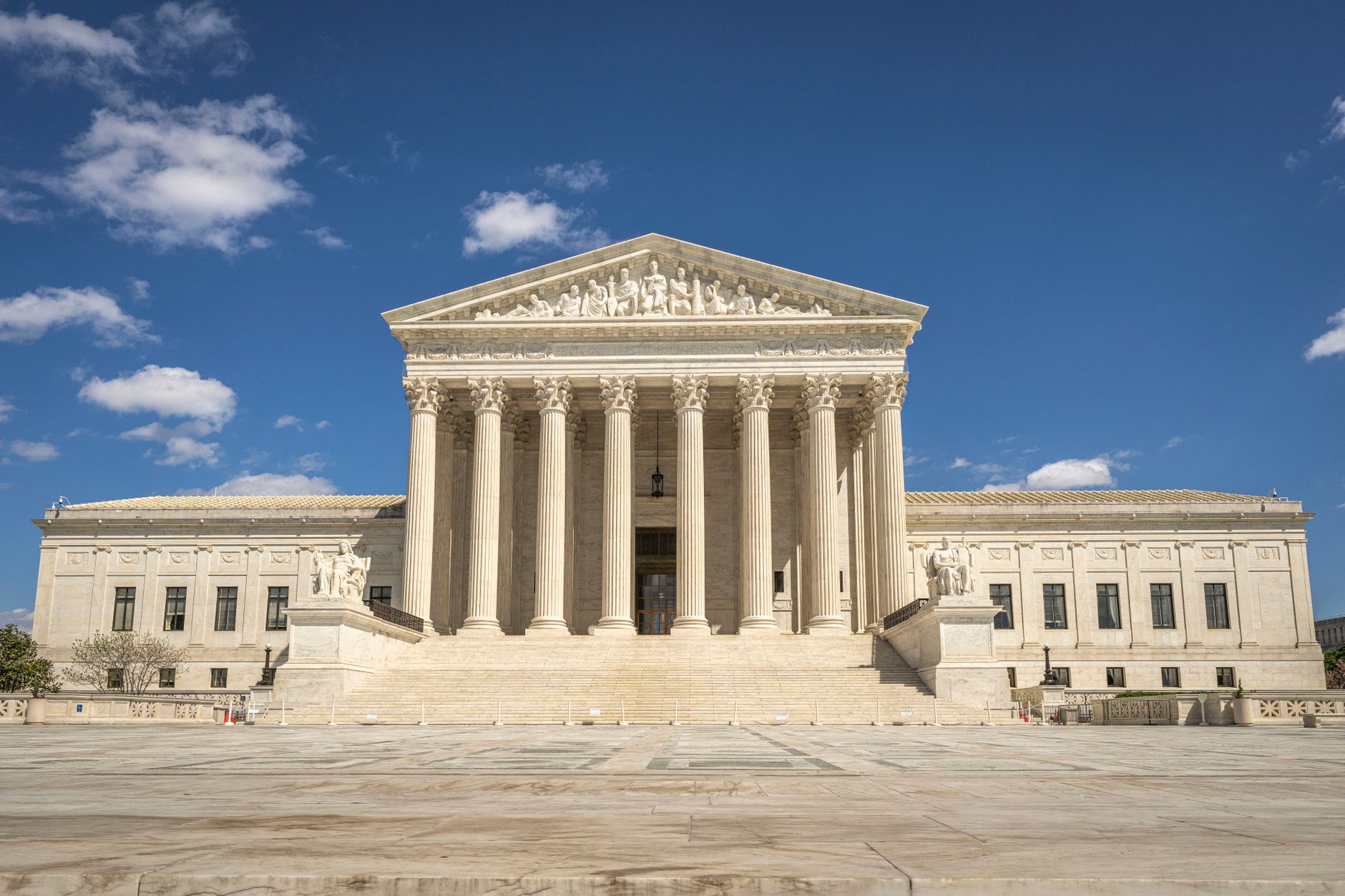
The U.S. Supreme Court handed down a landmark decision on June 30, ruling that state laws prohibiting transgender girls and women from competing on female school sports teams are constitutional. The 6-3 split fell along ideological lines. Six conservative justices formed the majority; the three liberal justices dissented.
The ruling resolved two cases that had been working through the courts for years — Little v. Hecox, which challenged Idaho's Fairness in Women's Sports Act, and West Virginia v. B.P.J., which challenged West Virginia's Save Women's Sports Act. Both laws restrict participation in female-designated school sports to athletes whose biological sex at birth matches that designation.
What the Majority Decided
Justice Brett Kavanaugh authored the majority opinion, joined by Chief Justice John Roberts and Justices Clarence Thomas, Samuel Alito, Neil Gorsuch, and Amy Coney Barrett. The court's central holding was that publicly funded schools may determine eligibility for women's and girls' sports teams based on biological sex without running afoul of either Title IX or the Equal Protection Clause of the 14th Amendment.
The ruling does not establish a nationwide mandate. States are permitted — but not required — to bar transgender girls from girls' teams or transgender boys from boys' teams.
Kavanaugh's opinion acknowledged the personal stakes for everyone involved. He expressed the view that no student-athlete on either side of the debate deserves to be treated as an outcast or subjected to hostility.
The Cases Behind the Decision
Both cases center on young people who wanted to compete alongside peers who share their gender identity. In West Virginia, Becky Pepper-Jackson, a middle school student, was blocked from joining her school's girls' cross-country and track teams under a state law that ties eligibility to the sex listed on an athlete's original birth certificate. She had previously won a preliminary injunction, which the Fourth Circuit Court of Appeals also upheld — before the Supreme Court took the case.
In Idaho, Lindsay Hecox, a transgender student at Boise State University, sought to join the women's cross-country team under the state's 2020 athletics ban. That law similarly prohibits participation based on gender identity rather than sex assigned at birth.
Both students were represented by the ACLU, with additional support from Lambda Legal and Cooley LLP.
Where the Dissenters Pushed Back
The three liberal justices — Sonia Sotomayor, Elena Kagan, and Ketanji Brown Jackson — each took issue with the majority's reasoning, particularly on equal protection grounds. All three agreed with the majority that the state bans do not violate Title IX, but argued the court was wrong to find no constitutional conflict.
Justice Sotomayor wrote that the majority, in protecting the rights of one group, imposes a burden on another without giving that group a genuine opportunity to argue its constitutional claims. She pointed out that before these categorical bans were enacted, many states had handled transgender athlete participation through individualized assessments — an approach the new laws swept away entirely.
The laws themselves contain a notable asymmetry. Female-designated teams are explicitly closed to students of the male sex in competitive or contact sports, while male-designated teams face no equivalent restriction — a disparity Sotomayor flagged directly.
Justice Jackson argued that the laws do permit sex-based discrimination under the guise of protecting sports. She reasoned that a transgender woman penalized for behavior associated with her birth sex has still experienced discrimination based on sex — just as a cisgender woman in the same position would have — and that Title IX may well prohibit both.
Advocates React
Human Rights Campaign President Kelley Robinson responded sharply to the ruling, saying no child deserves to be discriminated against and describing the decision as heartbreaking for transgender student athletes who are effectively sidelined for who they are. Robinson warned that when politicians frame any girl as potentially the wrong kind of girl, it opens the door to harassment, invasive questioning, and physical scrutiny of young people's bodies.
The stakes, Robinson argued, go well beyond sports. She called the decision consistent with a pattern of the court's conservative majority rolling back protections for marginalized communities, and urged advocates to focus on school board and state-level elections as the next front in the fight for inclusive policies.
Civil rights attorneys working on the cases were careful to note what the ruling does not do. The court did not endorse any federal requirement that states categorically exclude transgender students — a position the Trump administration had advanced. As one legal observer close to the cases noted, the court left the policy question with the states rather than federalizing it in either direction.
This ruling is likely to affect student civil rights enforcement more broadly, as ongoing debates over Title IX's scope and application continue at the federal level. Twenty-seven states have already acted. As of this ruling, at least that many have enacted some form of ban on transgender youth participation in school sports.